
How Can Air Purifier Fan Factory Support Cleaner Indoor Airflow
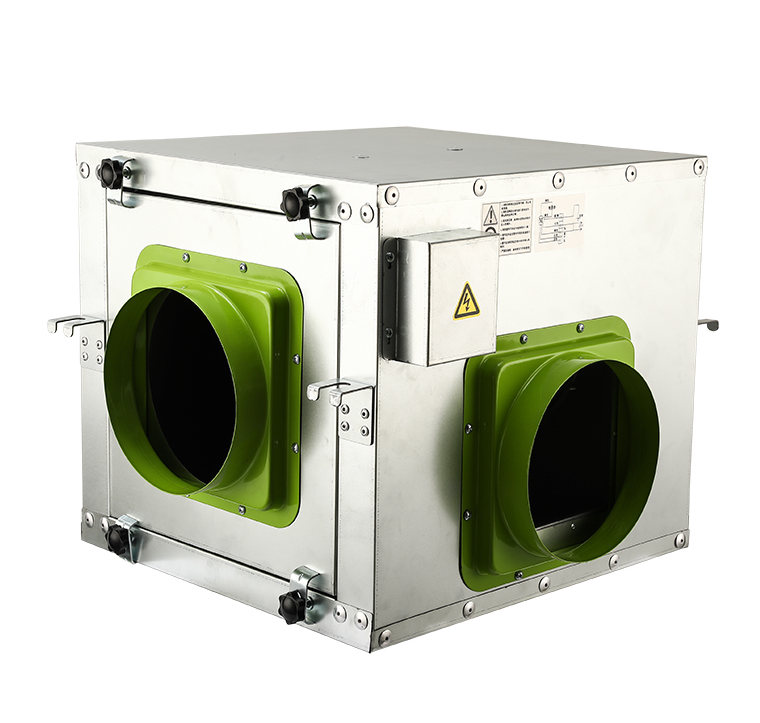
Air Purifier Fan Factory and Ceiling Fan Factory production lines reflect two different approaches to solving indoor airflow challenges. One focuses on air quality improvement, while the other emphasizes air movement distribution. Both play important roles in environments where ventilation is limited or artificially controlled.
Indoor air quality has become a growing concern in urban environments. Buildings with sealed windows and air conditioning systems often experience reduced natural air exchange. This can lead to accumulation of airborne particles such as dust, smoke residues, and volatile organic compounds released from furniture or decoration materials.
Air Purifier Fan Factory systems are designed to address these issues by continuously circulating air through filtration modules. A typical purification cycle may pass room air multiple times per hour depending on system capacity and room size. For example, a unit with a capacity of 300 m³/h may cycle air in a 20 m² room approximately 5–8 times per hour under standard conditions.
Filter efficiency is often measured using particle capture rates for different particle sizes. HEPA-level filters can capture a high percentage of particles as small as 0.3 microns, which includes fine dust and certain allergens. However, maintaining airflow while preserving filtration performance remains a technical balance during product design.
Ceiling Fan Factory systems focus on improving spatial air movement rather than filtration. Ceiling fans help reduce temperature stratification, especially in rooms with high ceilings. Without air circulation, warm air tends to accumulate near the ceiling while cooler air remains near the floor. This uneven distribution may affect overall comfort perception.
By creating continuous air movement, ceiling fans help mix air layers more evenly. This can reduce temperature differences within a room by improving vertical air circulation. Blade design, rotational stability, and installation height all influence how effectively air is distributed.
Energy efficiency is a shared concern in both product categories. Rising electricity costs and environmental awareness have encouraged manufacturers to design systems that maintain performance while reducing power consumption. Air purification systems often optimize fan speed curves, while ceiling fans focus on motor efficiency and aerodynamic blade shaping.
Manufacturing precision plays an important role in performance stability. Small variations in motor alignment or blade balance may cause vibration or noise issues during operation. Quality control processes often include rotational testing, airflow measurement, and noise evaluation to ensure consistent performance across production batches.
Air Purifier Fan Factory designs are also evolving toward multifunction systems. Some models integrate air quality sensors, humidity monitoring, and automatic airflow adjustment features. These systems aim to reduce manual control requirements while maintaining consistent indoor air conditions.
Ceiling Fan Factory innovations are also expanding beyond traditional designs. Some newer models include reversible rotation modes for seasonal airflow adjustment, allowing downward airflow in warm conditions and upward circulation in cooler environments. This flexibility helps improve usability across different climate conditions.
User expectations are also changing. Indoor appliances are no longer evaluated solely based on performance metrics but also on noise comfort, visual design integration, and smart control compatibility. As a result, manufacturers are increasingly focusing on design simplicity alongside functional improvements.
Both Air Purifier Fan Factory and Ceiling Fan Factory developments continue to evolve in response to indoor living trends. As buildings become more energy-efficient and tightly sealed, controlled airflow systems are expected to remain an important part of indoor environmental management strategies.

 Arabic
 French